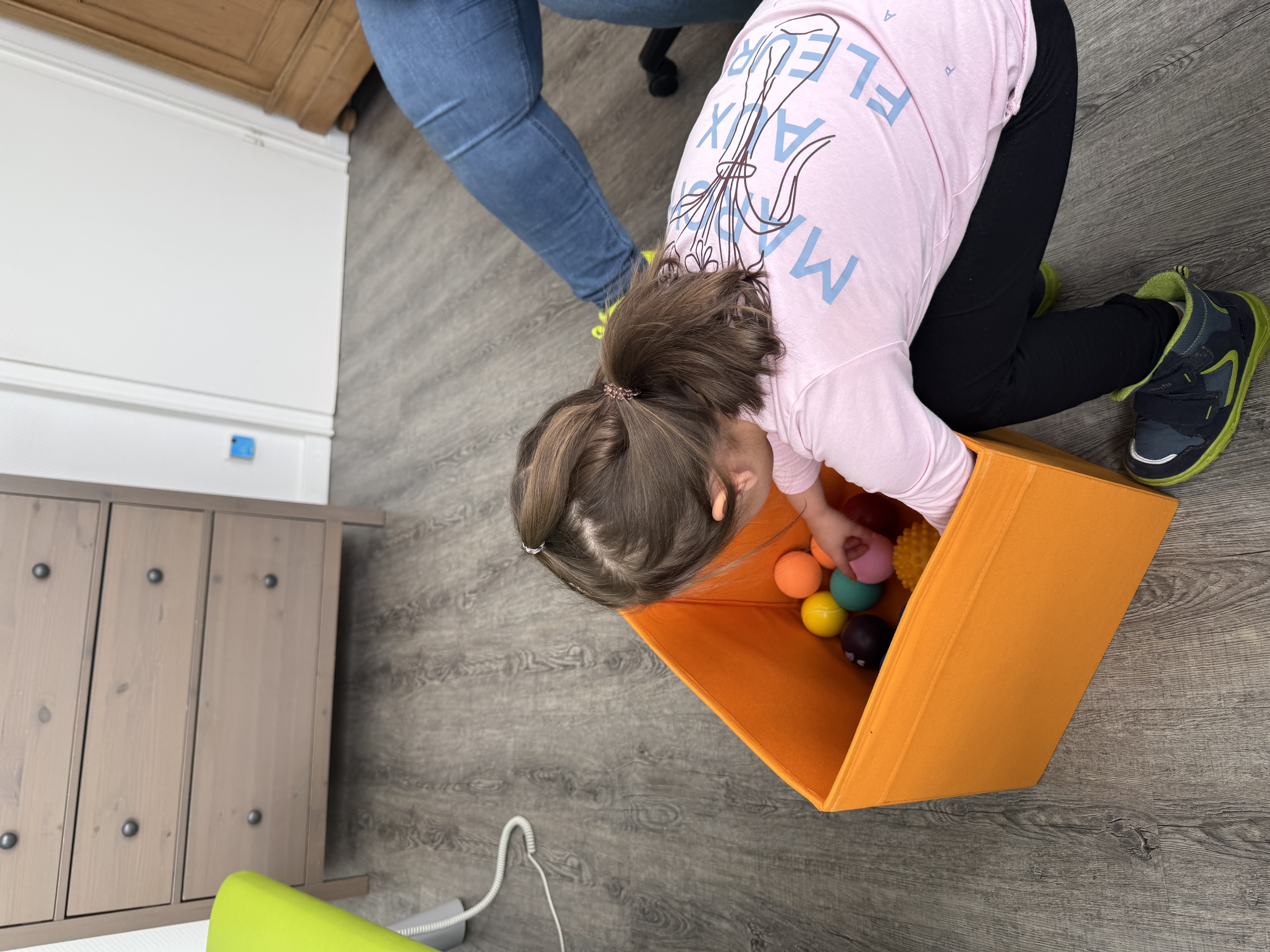
What is Occupational Therapy?
Occupational therapy helps people act as independently as possible in everyday life. For children, the focus is on promoting development and functional ability — from grasping and holding objects to dressing and eating.
For children with complex developmental delays like Emilia, occupational therapy is a central component of support, addressing the challenges of daily life directly.
Goals of Occupational Therapy
- Fine motor skills — Grasping, holding, releasing, hand-eye coordination
- Sensory integration — Processing sensory input (touch, balance, proprioception)
- Independence in daily life — Eating, drinking, dressing and undressing
- Perceptual development — Body awareness and spatial orientation
How Does Occupational Therapy Help Emilia?
Because of Dup15q Syndrome, Emilia faces difficulties in many areas that other children take for granted:
- Grasping and holding objects — Through targeted fine motor exercises, Emilia learns to grip things more securely
- Eating and drinking — Occupational therapy supports the development of feeding skills
- Dressing — Individual steps are practised one at a time
- Sensory processing — Emilia learns to better organise sensory input and respond to it
Methods
Various approaches are used in Emilia’s occupational therapy:
Sensory Integration Therapy (SI)
Targeted sensory stimulation helps Emilia process sensory impressions more effectively and respond to them appropriately. This includes swinging, balancing, tactile games, and working with different materials such as sand, clay, and water.
Bobath Concept
A neurophysiological approach that promotes movement initiation and postural control. This concept is particularly used with children with muscle hypotonia — like Emilia — to build muscle tone and improve movement patterns.
Further Information
Emilia’s occupational therapy takes place at Mehrfach Ellwangen.
The Deutscher Verband Ergotherapie (DVE) provides information about occupational therapy for children and helps with finding specialist therapists.