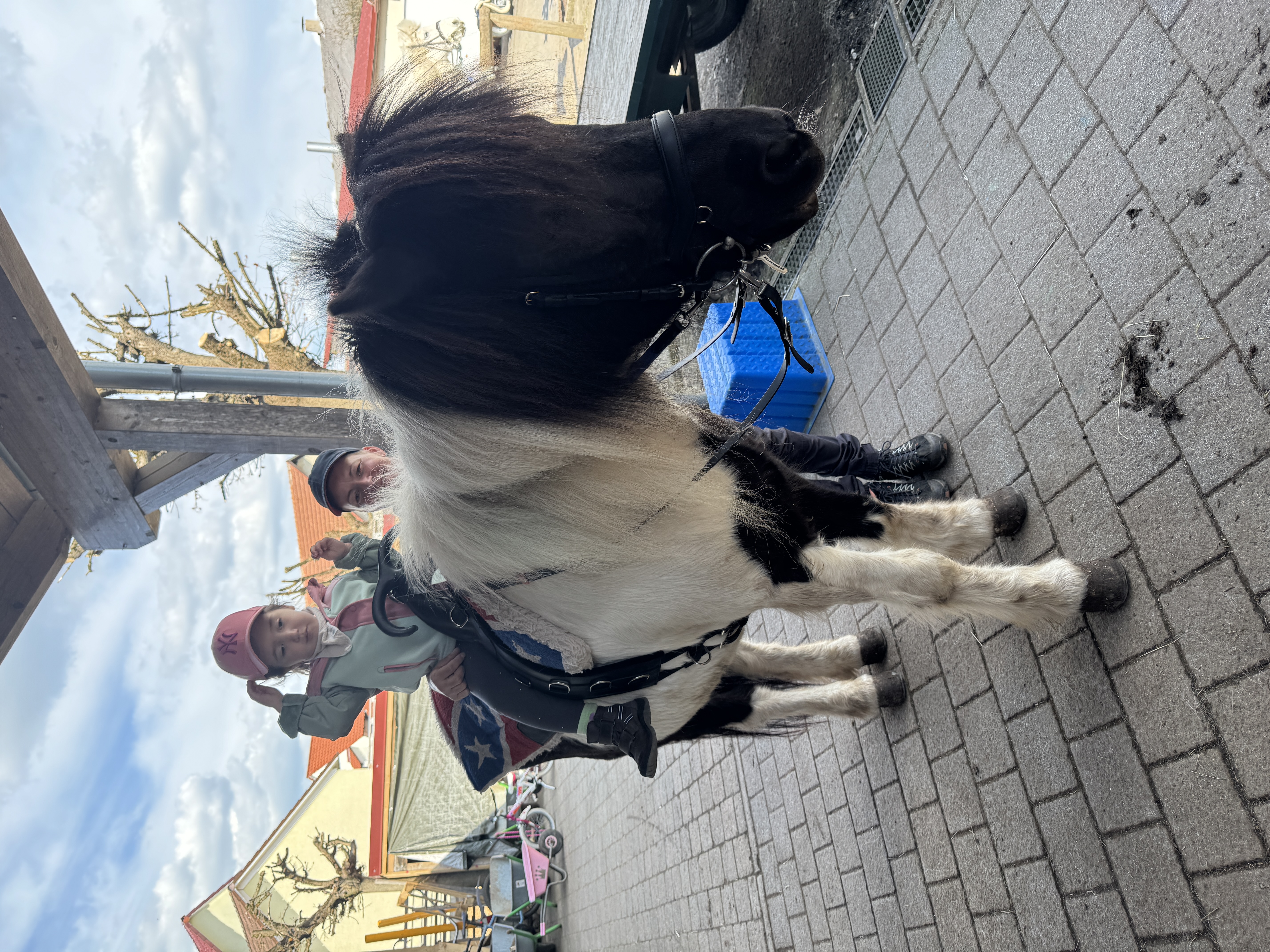
What is Horse Therapy?
Horse therapy — also known as therapeutic riding — uses the movement of the horse as a therapeutic medium. The three-dimensional movement of the horse’s back is similar to the human gait and transfers directly to the rider’s body. In this way, muscles, balance, and coordination are engaged naturally.
For children with disabilities, horse therapy offers a unique form of access: the warmth and movement of the horse create sensory experiences that cannot be replicated in any gymnasium.
How Does Horse Therapy Help Emilia?
Emilia lives with muscle hypotonia — reduced muscle tone that makes movement and posture more difficult. The rhythmic movement of the horse helps her to:
- Build core stability and body tension
- Improve balance and coordination
- Develop sensory awareness — Emilia learns to better sense her body in space
- Form an emotional bond with the animal, strengthening trust and self-confidence
The non-verbal communication with the horse is especially valuable for Emilia, who is herself non-verbal. The horse responds to body language — a form of communication that works without words.
What a Session Looks Like
A typical horse therapy session lasts 30–45 minutes and includes:
- Greeting and making contact — Emilia greets the horse, strokes it, and builds a connection
- Warm-up with the horse — Guided walking, getting used to the movement
- Therapeutic exercises — Targeted exercises on horseback (balance, reaching, trunk rotation)
- Free phase — Relaxed riding in which Emilia can enjoy the movement
- Farewell — A mindful goodbye to the horse
Further Information
Emilia’s horse therapy takes place at Reittherapie Meindl im Ostalbkreis.
The Deutsches Kuratorium für Therapeutisches Reiten (DKThR) is the professional association for all forms of therapeutic riding in Germany.